The Art of the Learning Circle: A Japanese Approach
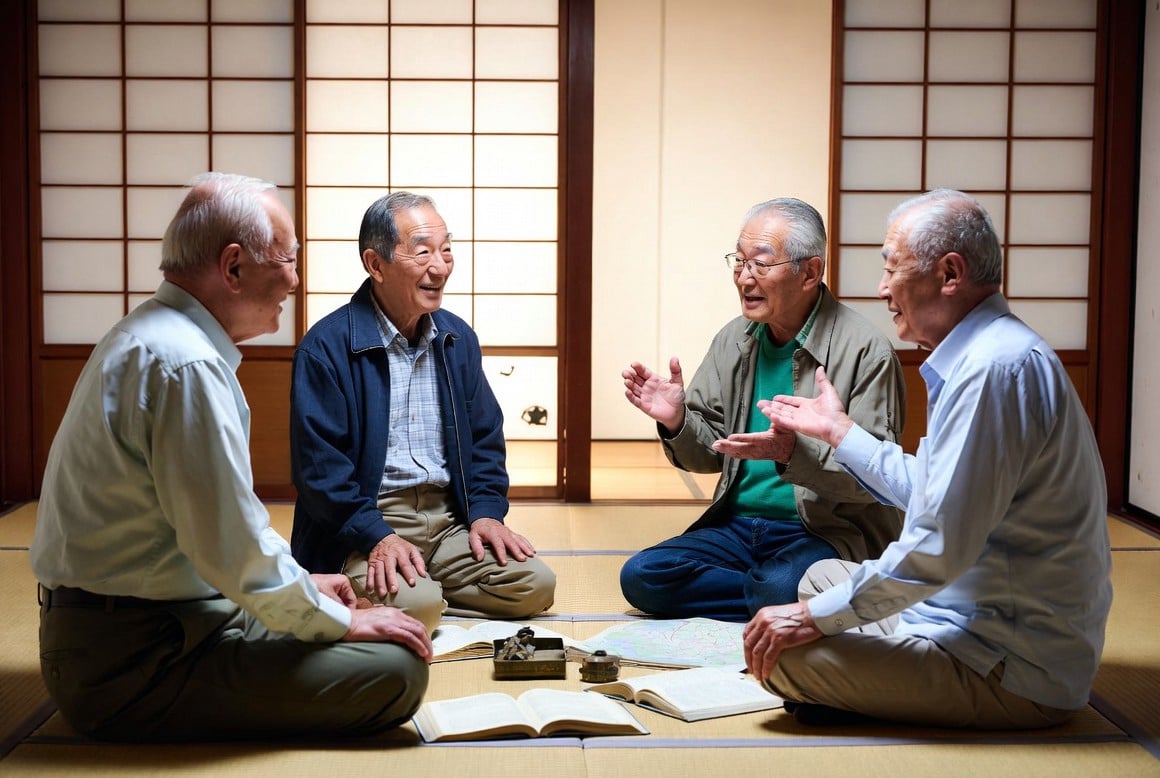
In Japan, there is a quiet but powerful tradition called the “gakushū sākuru,” or learning circle. Unlike a formal class with a teacher at the front, a learning circle brings together a small group of people who share a common curiosity. They meet regularly, sometimes in someone’s living room or a local community center, and they explore a topic together without hierarchy. This model is perfectly suited for senior education because it removes all pressure to perform. Instead, adult learning becomes a shared journey where every voice matters equally. Nobody is the expert. Everybody is both a student and a teacher.
The philosophy behind the learning circle is deeply Japanese. It values wa (harmony), mutual respect, and the belief that knowledge grows best in gentle soil. When applied to lifelong learning, this approach transforms the typical classroom dynamic. There are no tests, no grades, and no competition. There is only a shared commitment to show up, listen carefully, and offer what you have learned from your own life. For older adults who may have had difficult experiences with formal schooling decades ago, adult learning in a circle feels safe. You are never put on the spot. You are never told you are wrong. You are simply invited to contribute when you are ready.
Let us imagine a fictional but very real example. Four retirees in a quiet Tokyo neighborhood—a former librarian, a carpenter, a home cook, and a schoolteacher—decide to form a learning circle about the history of their local river. They meet every other Thursday morning for tea and conversation. The librarian suggests sources. The carpenter remembers how the river banks changed after a flood in the 1970s. The cook shares old family stories about fishing there. The schoolteacher finds maps from the Meiji era. This is senior education at its finest: messy, collaborative, and deeply human. No single person plans the curriculum. The curriculum emerges from their shared curiosity.
One of the most beautiful aspects of the learning circle is that it naturally supports lifelong learning without any outside structure. After six months, the group above is no longer just studying a river. They are studying memory, change, resilience, and community. They have started inviting younger neighbors to join their discussions, creating intergenerational adult learning where teenagers learn local history from retirees, and retirees learn digital mapping from teenagers. The circle has become a living organism of curiosity. This is what senior education can look like when it is freed from institutional expectations and allowed to grow organically.
How can you start your own learning circle? First, find just two or three people who share a mild interest in something—any topic will do. It could be the films of a certain director, the birds in your local park, or the way Japanese seasons appear in poetry. Then agree on a simple rhythm. Meet once every two weeks for no more than ninety minutes. Begin each session with tea and five minutes of quiet. Then take turns sharing one thing you noticed or wondered about since the last meeting. That is all. Lifelong learning does not need a syllabus. It needs only a container of trust and a spark of shared wonder.
At Wisdom Path, we have seen learning circles flourish across Tokyo. Members who joined feeling isolated now look forward to their circle as the highlight of their week. Adult learning in this format restores something that many older adults have lost: the feeling of being heard, valued, and intellectually alive. The Japanese approach to senior education reminds us that knowledge is not a possession to be acquired. It is a relationship to be cultivated. When you sit in a circle with curious friends, you are not just learning a subject. You are learning how to listen, how to wonder, and how to grow old without growing small. That is the true art of the learning circle.